
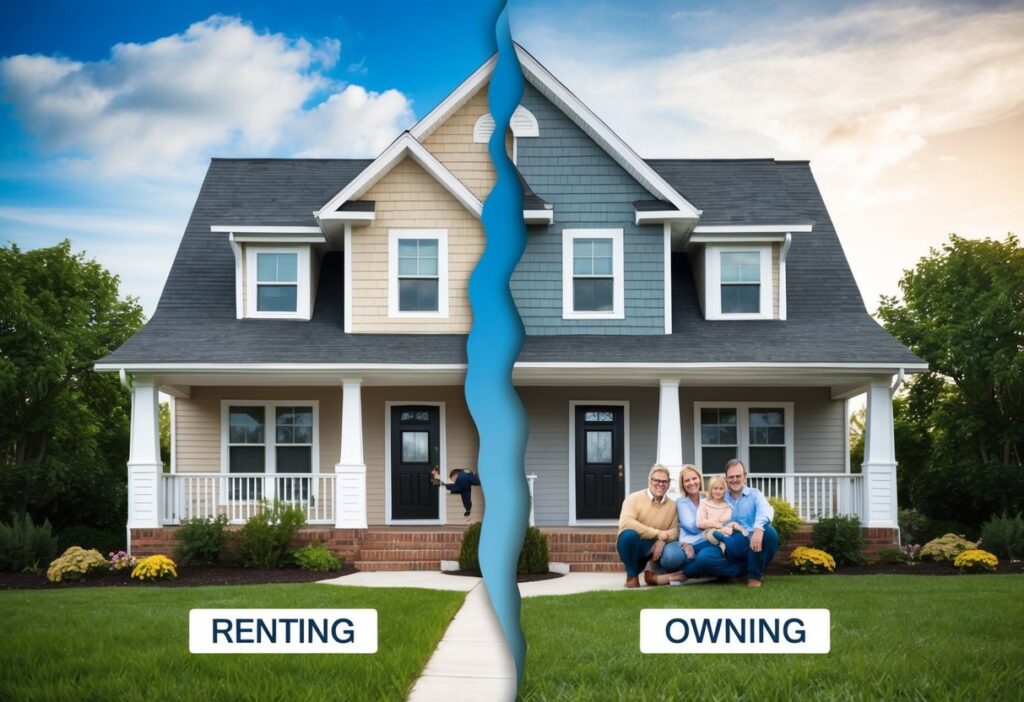
Deciding whether to rent or own a home is a major life choice. Your lifestyle, financial situation, and long-term plans all play a role in making this decision.
If you’re someone who values flexibility, renting might be more suited to your needs. It offers the ability to move without much hassle and saves you from dealing with property maintenance.
On the other hand, owning a home can be an investment in your future, providing a sense of stability and the potential to build equity over time.
Consider your current and future priorities. Are you looking to settle down or keep your options open? Each choice has its pros and cons, from financial commitments to lifestyle impacts.
Explore these aspects to see which side of the renting vs. owning debate works best for you.
Contents
Understanding Renting and Owning
When deciding between renting and owning a home, you need to consider various factors. These include financial commitments, freedom to personalize the space, and long-term benefits.
Basics of Renting
Renting a home involves signing a lease with a landlord. This lease outlines the terms, like how much you’ll pay per month and how long you can stay.
Renting can be simpler because you usually won’t have to worry about property taxes or major repairs.
In most cases, renters can choose shorter-term commitments, which offers flexibility if your situation changes. Monthly rent can sometimes be less than a mortgage, allowing you to save money for other expenses or goals. However, rent can increase over time, which might affect your budget.
The Homeownership Journey
Owning a home often starts with a big decision: buying the right house for you. You’ll need to consider your financial situation, as homeowners are responsible for a mortgage, property taxes, and home maintenance. These costs are important parts of homeownership.
While buying a home usually requires a significant upfront investment, like a down payment, it offers stability. Homeowners have more freedom to make changes to their property. This could mean anything from painting walls to renovating the kitchen.
Paying off a mortgage also builds equity, which can be a valuable long-term asset.
Financial Considerations
Deciding between renting and owning involves many financial aspects. You need to think about upfront costs, ongoing expenses for maintenance and repairs, and the potential for building equity.
Initial Costs of Renting vs. Owning
When you rent, your initial costs are usually just the first month’s rent and a security deposit. This is usually cheaper than the expenses you face when buying a home.
Buying a house involves significant upfront costs, including the down payment, closing costs, and possibly mortgage insurance. These could add up to thousands of dollars.
Your credit score can affect your mortgage rate, making some loans more expensive. Buying a home may also require homeowners insurance, adding to your initial spending.
Maintenance and Repairs Budgeting
If you rent, the landlord usually pays for maintenance and repairs. This can save you a lot because unexpected repairs can be expensive. You won’t need to budget for things like a broken heater or leaky roof.
Homeownership means you’re responsible for all repairs and upkeep. Regular maintenance like lawn care and unexpected repairs can add to your monthly budget.
It’s essential to set aside some savings for these inevitable costs. Home value is often linked to maintenance, so keeping your house in good shape is crucial.
The Long-Term Picture: Equity and Mortgages
Owning a home allows you to build equity over time as you make mortgage payments towards the principal balance. This can enhance your assets and possibly lead to more wealth in the future.
In contrast, renting provides no financial return or equity. Homeownership may offer you tax benefits, like deductions on mortgage interest and property taxes.
Over the years, owning might become more affordable than renting, depending on the real estate market and interest rates. However, you should consider the potential for housing market fluctuations that can affect home value and stability.
Lifestyle and Flexibility
Choosing between renting and owning a home impacts your lifestyle and flexibility. Renting offers more freedom to move, while owning provides stability and allows for personal touches. Each choice has unique benefits depending on what is most important to you.
Living Arrangement Flexibility
As a renter, you can adapt easily to changes. If you get a new job in another city, you can move without the long process of selling a house.
Many leases are short-term, often one year or less, which means you can explore different neighborhoods or styles of living. This is perfect for those who value experiencing different communities or have jobs that require relocation.
Renting can also be a great option if you don’t want the long-term commitment of owning. It’s a suitable choice for those who aren’t ready to settle down or uncertain about their future lifestyle needs.
Enjoy living in a dynamic environment without being tied down. This flexibility is a key advantage for many renters.
Stability and Settling Down
Owning a home brings a sense of stability. It can provide the foundation for a lifelong lifestyle, especially if you plan to raise a family.
When you own a home, you’re part of a community, building relationships with neighbors. This can be crucial for families with children who seek stability in schools and social circles.
Ownership often leads to pride in caring for your property. You don’t have to worry about sudden rent hikes or lease terminations.
Knowing what to expect financially allows better planning. For many, this sense of control and stability is unmatched by renting.
Personalization and Renovations
When you own a home, personalization becomes a reality. You can paint walls, renovate kitchens, or create the garden of your dreams.
This freedom allows you to express your style and build a space that suits your lifestyle needs. For those who have a specific wish list, owning is often the only way to turn those dreams into reality.
Although personalization is limited for renters, it’s possible to make small changes, like adjusting furniture or using removable décor. Privacy might also vary, as some agreements include shared spaces or close neighbors. Owning generally offers more privacy and fewer restrictions, allowing for more significant transformations.
Pros and Cons of Renting
Renting can offer a range of benefits, like flexibility and lower initial costs, but it also has its downsides, such as less stability and potential rent increases.
Advantages of Renting
Renting provides flexibility, allowing you to move without the hassle of selling a property. If your job requires relocation or if you like experiencing new areas every few years, renting can be ideal.
You typically pay less upfront with no large down payment needed. Besides the first month’s rent, you might need a security deposit, but this is often much less than the cost of a down payment on a house.
In some cases, rent can be cheaper than a mortgage, especially in certain major metros where the cost of buying has increased. When you rent, landlords are usually responsible for maintenance, so unexpected repair costs aren’t your headache.
Downsides of Renting
Renting can mean dealing with a landlord who might not address issues as quickly as you’d like. You may also face rent increases, particularly if your area does not have rent control laws to limit how much rent can be raised.
A lease may include restrictions, such as no pets or renovations without permission. Renting also lacks long-term equity building, meaning your monthly payments go towards your landlord’s investment, not yours.
Lastly, there’s less stability compared to owning. Your landlord could decide to sell, leaving you to find a new home unexpectedly.
Pros and Cons of Owning
When you own a home, you can enjoy benefits like building equity and potential financial gains, yet you’ll also face challenges like maintenance and extra costs.
Benefits of Homeownership
Owning a home allows you to build equity with each mortgage payment. Over time, as you pay down your loan, you own more of your home, building your wealth.
Another benefit is that homes can increase in value. As the market changes, your home might become worth more than when you bought it. This can be a big part of the dream of homeownership, giving you financial security.
Choosing to buy often gives you more stability and control over your living space. Unlike renting, you can make changes to your property to suit your lifestyle. This creates a sense of belonging and investment in your future.
Challenges of Homeownership
With ownership, you have to manage home upkeep and repairs. Any problem or issue that arises is your responsibility to fix, which can be time-consuming and costly.
Additional costs come with owning a home. Besides mortgage payments, you need to pay for home insurance and sometimes homeowners association (HOA) fees. These all add to the total cost of owning.
Lastly, home values can fluctuate. If the market drops, your home’s worth might decrease, affecting your equity. This risk can be challenging for some homeowners who rely on their home’s value for future financial plans.
Market Factors and Timing
The decision to rent or buy a home can be heavily influenced by the housing market and timing. Understanding when and where to make your move is crucial for making the best financial and lifestyle choices.
Understanding the Housing Market
The housing market is influenced by many factors, and it’s important to know how these can affect your decision.
Property values often rise and fall due to economic conditions, changes in interest rates set by the Federal Reserve, and levels of inflation.
For example, places like San Francisco and New York tend to have higher property values, while areas like Arizona or Texas might offer more affordable options.
Supply and demand also play a big role in house prices. When there are fewer homes available, prices tend to go up.
Understanding local market trends is key. You might want to follow reports from organizations like the National Association of Realtors to stay updated on the latest market news in areas like Minnesota, Utah, or Maine.
Best Time to Rent or Buy
Timing your purchase or rental can save you money and reduce stress. If the market is experiencing high property values, it might be better to rent, especially in states like California and New York where prices are steep.
Watch for periods where interest rates are low; this can be a good time to buy as mortgage costs will be cheaper.
Seasonal changes can also impact market dynamics. For instance, you may find more rental options and better prices in the fall when fewer people are moving.
Markets like Wisconsin and Pennsylvania might have different peak times than sunnier states like Arizona and Texas, so consider your local market’s patterns before making a decision.
Decision-Making Tools and Resources
Making the choice between renting and owning can be complex. Thankfully, there are tools and resources that can help you figure out what fits your needs best. These range from online calculators to expert advice.
Rent vs. Buy Calculator
A rent vs. buy calculator can be a valuable tool in deciding whether to rent or own. These calculators help you see the numbers clearly.
By inputting your personal data, such as your rent, home price, down payment, mortgage rate, and how long you plan to stay, you can estimate the financial impact of buying compared to renting.
Tools like NerdWallet’s Rent vs. Buy Calculator make this easy. They consider factors like property taxes and home’s appreciation. With this information, you can see when buying becomes a better deal than renting, helping you make an informed choice.
Financial Planning for Housing
Thinking about your financial situation is crucial when deciding to rent or buy. Start with a budget that includes savings for a down payment and other costs like moving expenses.
Consider any existing credit card debt or loans, as they can affect your ability to secure a favorable mortgage rate.
It might be useful to consult financial advisors who can assist in mapping out your investment plan. Creating a financial roadmap will help you figure out how much you can afford and whether owning or renting fits your long-term goals.
Expert Advice and Research
Consulting real estate experts and researching housing markets can guide your decision. Real estate agents and financial consultants offer personalized advice based on current market trends and your personal circumstances.
They can help you with questions about mortgage rates or potential home appreciation.
Reading up-to-date reports and articles from trusted sources like real estate websites or publications can keep you informed about housing trends and predictions. Experts like economists or market analysts can help you understand the best timing for a purchase or rental.
Additional Considerations
When deciding between renting and owning a home, there are several financial aspects to consider. This includes insurance and taxes, handling home repairs and maintenance, and how to manage debt and investments wisely. Understanding these elements will help you make an informed choice.
Insurance and Taxes
Owning a home requires homeowners insurance. This insurance protects your property from damage or loss and is often a lender requirement.
While it involves regular payments, it’s crucial for your financial security.
You’ll also need to pay property taxes. These are based on your home’s value and vary by location. If you rent, the landlord is responsible for property taxes, although they may indirectly affect your rent.
On the upside, owning a home may provide tax benefits. You might be able to deduct mortgage interest and property taxes, reducing your taxable income. It’s a good idea to consult with a tax professional to understand these benefits and how they apply to your situation.
Home Repairs and Maintenance
Owning a home means taking responsibility for repairs and maintenance. This includes regular upkeep like landscaping, fixing leaks, or replacing appliances.
These costs can add up, so it’s wise to have a savings plan for unexpected repairs.
Renters often have fewer maintenance worries. Generally, landlords handle major repairs and maintenance tasks. You may still need to do basic upkeep like changing light bulbs or cleaning, but major issues are typically not your responsibility.
If you own, planning for maintenance expenses is essential. Setting aside money monthly for these costs will help ensure your home stays in good condition without breaking the bank.
Managing Debt and Investments
Homeownership involves managing mortgage debt. It’s generally considered “good debt” due to potential property value increases. But, it’s important to manage it wisely.
Ensure you can afford mortgage payments. Also, try to reduce any high-interest debt like credit card balances.
One financial advantage of owning is building equity. As you pay down your mortgage, you increase your ownership stake in the property. This equity can be helpful for future financial needs, such as refinancing or funding major life events.
Investing in real estate can also diversify your portfolio. However, don’t overlook other investment opportunities.
Balancing real estate with other savings and investments can create a more stable financial future.


